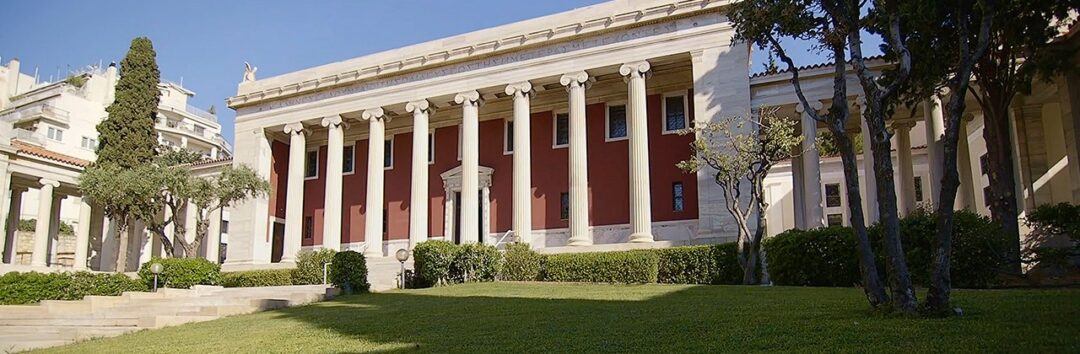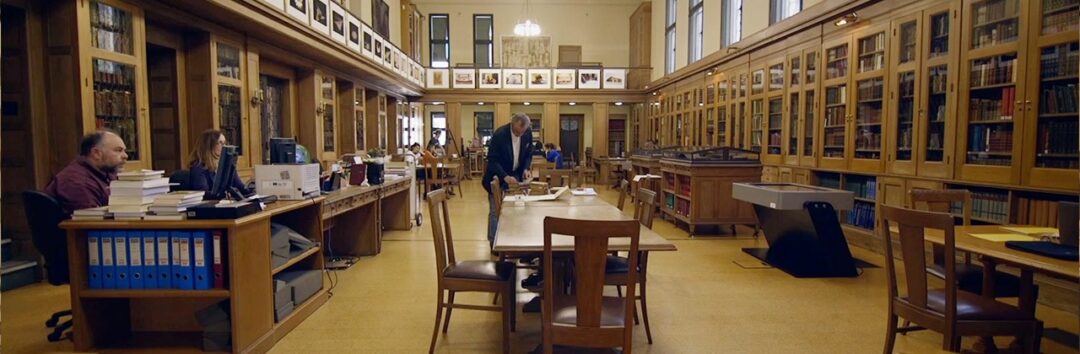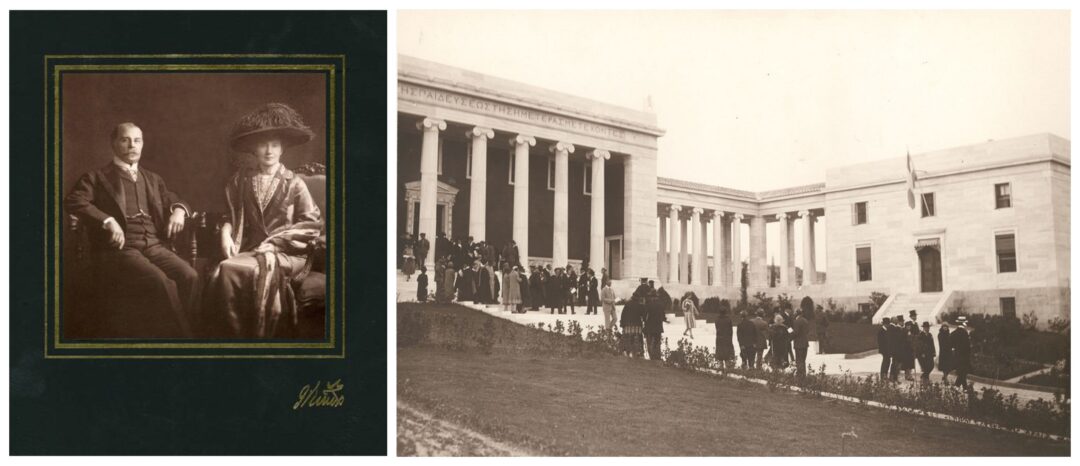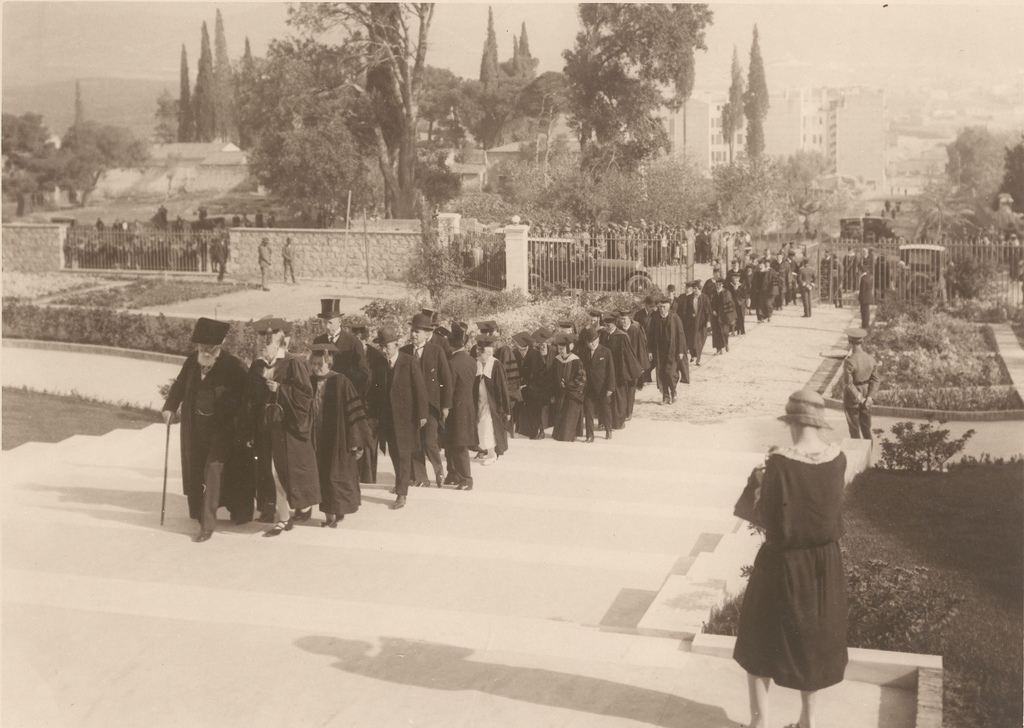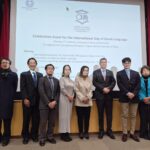
The strategic principles and key priorities of the Greek government’s cultural policy were presented by Culture Minister, Lina Mendoni, speaking at the Center for Hellenic Studies at Harvard University. The fundamental principles of preserving, protecting, and promoting Greece’s heritage, as well as its contemporary artistic creation, along with recognising and highlighting culture as a national developmental asset and a cornerstone of the country’s intellectual, economic, and social revitalisation, progress, and prosperity, were thoroughly outlined by Mendoni in her address to a large audience attending her lecture. (Cover photo: Hellenic Heritage: the official Gateway to museums and cultural sites, offering guides, tickets, stories, curated experiences, and more)

Lina Mendoni noted that “our heritage must be protected, but not frozen in time. Museums, monuments, and archaeological sites are living parts of society, connected to communities, attracting visitors, and generating cultural, educational, and economic activity. When integrated into everyday life, heritage thrives, creating stronger incentives for its protection and greater social impact.” Regarding cultural heritage and contemporary creation, a key parameter, she added, is that they contribute to economic development, generate income and jobs, attract investment, and strengthen tourism, with which they are closely linked.“ Monuments and museums are not spaces of consumption. They are landmarks embedded in collective memory and identity. They unite generations, foster pride and social cohesion, and project the image of a place beyond national borders,” she emphasised.

(Source: Ministry of Culture, Athens-Macedonian News Agency)

The Minister of Culture, Lina Mendoni in her speech at the Center for Hellenic Studies at Harvard University (Source: Ministry of Culture). Greece’s cultural policy includes main initiatives such as the Cultural Charter for all regions, major restoration and digital transformation projects, expanded cultural tourism, new digital platforms, and strengthened efforts against illegal antiquities trafficking and for the return of the Parthenon Sculptures.

“Cultural Charter of Development and Prosperity” for the 13 Regions of Greece: Vision for Growth and Prosperity

Since 2019, the Greek government has pursued a major shift in cultural management so that Culture serves both its social and developmental role. “The past six years,” the Minister of Culture noted, “we have worked systematically toward implementing a new, flexible, and dynamic model, redefining both the goals and the methods. This approach is grounded in scientific knowledge, data analysis, coherent planning, and realistic programming. It aims for multiplier effects and economies of scale, strengthening innovation, improving effectiveness, and ensuring the efficient use of funding and resources”.

Hellenic Heritage is the new official platform of the Hellenic Ministry of Culture and ODAP (Hellenic Organization of Cultural Resources Development) – a contemporary hub that brings the essence of Greek culture. Available from September 5, 2025, hh.gr serves as the official guide to more than 350 archaeological sites, monuments and museums. Designed from the visitor’s perspective, it offers essential information, integrates all Hellenic Heritage services—Tickets, Experiences and Shop—and supports future digital innovations. With a strong focus on accessibility and inclusivity, hh.gr uses advanced storytelling tools to bring history to life. This launch marks a major milestone in ODAP’s digital strategy, blending tradition with modern technology.

A key initiative is the “Cultural Charter of Development and Prosperity”, designed for all 13 Regions of Greece with a planning horizon to 2030. The Charter serves as an active roadmap tailored to each region and includes major infrastructure projects, cultural funding schemes, and institutional reforms. It places equal emphasis on safeguarding Greece’s tangible and intangible cultural heritage—from ancient monuments and historic sites to modern art and living traditions—and on supporting the cultural expressions that shape Greece’s identity today.

The Charter seeks to transform culture into a strategic asset for recovery, sustainable development and social cohesion—not only in major cities but across every region of the country. It reflects a broader global and European shift toward viewing culture and creativity as engines of innovation, economic vitality and community resilience. By combining infrastructure, regulatory modernization, digital innovation, and active support for contemporary creation, the Charter builds a strong, future-oriented cultural ecosystem that delivers long-term value for Greece and its citizens.

 “The strengthening of cultural tourism is a key objective of the Ministry of Culture and Sports for the Region of Thessaly, as the area is an emerging tourist destination,” emphasized the Minister of Culture and Sports, Lina Mendoni, during the presentation of the Thessaly Development Program, led by Prime Minister Kyriakos Mitsotakis, in Larissa, in February, 2023 (Photo above: From the Prime Minister’s visit to the Ancient Theater of Larissa). The Ministry of Culture, in close collaboration with the Region of Thessaly, is implementing a coherent plan of projects worth 100 million euros, using EU funds and national resourcesand focusing on the protection and restoration of monuments and archaeological sites, as well as the creation of modern museum and cultural infrastructure. Key cultural initiatives include strategic plans to integrate major archaeological sites, such as ancient Demetrias and Byzantine Anchialos, into urban areas. The Ministry created visitable underwater sites in Alonnisos and Western Pagasetic Gulf, including the renowned Peristera shipwreck, recently listed among National Geographic’s top 50 diving destinations. Projects also include: the Diachronic Museum in Trikala; the Integrated Management Plan for Meteora, balancing tourism and monastic life; the restoration of theaters in Phthiotic Thebes, Larissa, and Demetrias; cultural routes through Pelion and Skiathos; and improved access to Theopetra Cave and the Neolithic settlement at Dimini, strengthening Thessaly’s cultural tourism (Source: Ministry of Culture)

A core element of the Charter is its recognition of culture as a lever for regional development, cultural tourism, and job creation. By embedding culture into local and regional economies, the plan aims to strengthen cultural and creative industries, boost visitor flows, generate employment across related sectors, and address long-standing regional inequalities. It also places strong focus on inclusion and equal access, ensuring that cultural infrastructure, services, and experiences are accessible to people with disabilities and responsive to the needs of both urban and rural communities.

Using EU funds (NSRF, RRF) and national resources, the Ministry is carrying out the largest cultural investment program in Greece’s history: over 850 projects with a total budget exceeding €1.3 billion. Completed and ongoing works include the restoration of monuments, conservation of heritage, museum upgrades – since 2019, 28 new or fully restored museums have already opened to the public, with another 28 planned for completion by 2028 – and construction of new cultural infrastructures. These projects support local economies, strengthen social cohesion, promote balanced regional development, and provide thousands of jobs.

In September, 2025, the Ministry of Culture delivered fully restored Christian monuments in the town of Veria: the historic Churches of Saint Anna (upper photos, Guided tour of Minister, LIna Mendoni) and Christ Pantocrator (lower photo). In Imathia (Region of Central Macedonia), from 2019 to today, the Ministry of Culture has completed and is implementing cultural projects amounting to more than 25 million euros, within the framework of its integrated planning. Among other initiatives, these include the Polycentric Museum of Aigai, the restored Palace of Philip II at Aigai, the Virtual Museum ‘Alexander the Great: From Aigai to the Oikoumene,’ the outdoor permanent exhibition at the Archaeological Museum of Veria, the exhibition of the Treasury Hall at the Holy Monastery of Dovra, the conservation and showcasing of the Byzantine Acropolis of Veria, and the conservation and restoration of Christian and Ottoman monuments, also in Veria (Source: Ministry of Culture)

The Virtual Museum “Alexander the Great: From Aigai to the Oikoumene”

Digital innovation in the service of Culture

Digital transformation is another cornerstone of the Charter, modernizing how cultural resources are managed, documented, and presented to the public. Lina Mendoni highlighted the Ministry of Culture’s investment in digital technologies and tools to enhance the management of Greece’s cultural heritage. The Ministry has implemented large-scale projects through the “National Archive of Monuments”, using virtual and augmented reality, collaborations with tech companies like Microsoft and Google, and a strategy to integrate Artificial Intelligence. Key goals include accelerating digitization, improving conservation, preventing illicit trafficking, providing personalized cultural experiences, supporting research with big data, and ensuring ethical standards for transparency and data protection.

The Portal of Digital Collections of Movable Monuments of the Ministry of Culture(National Archive of Monuments) includes objects – movable monuments that primarily originate from the collections of the Museums of the Ministry of Culture and the broader Public Sector. The portal is being gradually updated and provides access to approximately 680,000 registered entries through the Integrated Information System (IIS) of the Ministry of Culture.

The Archaeological Cadastre, also available online, records and documents Greece’s immovable monuments, archaeological sites, historical sites, and their protection zones. Today, the Archaeological Cadastre Portal contains descriptive (archaeological, and administrative) and geospatial data for more than 21,500 monuments, approximately 3,400 archaeological sites and historical sites, 844 protection zones and 220 museums.

A huge nationwide digital transformation —more than 27.3 million euros investment — has modernised 107 museums and archaeological sites aiming to more inclusive access, better management, enriched visitor experience, and bridging heritage with digital modernity. This includes unified ticketing & access-control, a “Hellenic Heritage Web App”, digital signage, QR codes, interactive tours in multiple languages (including Greek Sign Language), and AR/VR experiences at flagship sites (e.g. Sounion, Delos, Ancient Agora of Athens, Ancient Olympia, Rotunda of Thessaloniki).

The past comes alive before your eyes!  We tried the innovative #AugmentedReality (AR) application on hh.gr — and the result? Absolutely enchanting! At the Temple of Poseidon in Sounio, AR technology transported us back in time, recreating the site in its original grandeur. An immersive experience that blends history, technology and emotion. (Source: ODAP,  Hellenic Heritage, the official Gateway to museums and cultural sites)

A special mention was also made of the Ministry of Culture’s program for the restoration and adaptive reuse of the former royal estate at Tatoi. Beyond the built environment, the extensive landscaping will transform the site into accessible green spaces for recreation and outdoor activities, promoting sustainable tourism and social engagement. The project preserves the estate’s historical significance while creating a modern destination that integrates culture, nature, and leisure.

The Tatoi Collections  of the former Royal Estate, was recently registered online. It is the largest collection of its kind in Greece, dedicated to fine and applied arts and to Greek history, comprised of more than 70.000 objects that were recorded and documented by the Ministry of Culture at the former royal estate of Tatoi.

Cultural routes

In 2025, Greece launched a major national initiative to create a network of thematic cultural-heritage routes across the country, supported by approximately €50 million in EU Recovery and Resilience funding. This ambitious plan aims to highlight the depth and diversity of Greek history by organizing cultural destinations into coherent, story-driven itineraries that connect different regions and historical periods. The overarching goal of the project is to create meaningful connections between archaeological sites, monuments and local communities, turning them into unified cultural experiences. These cultural-heritage routes aim to offer visitors deeper, more immersive journeys through Greece’s layered past, while generating long-term benefits for the regions they traverse.

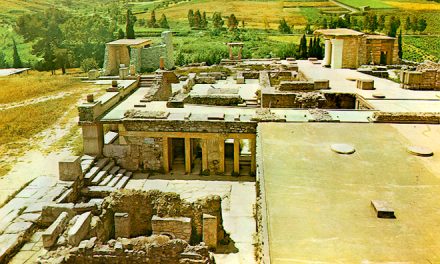
 “Monumental Works of Cyclopes and Men”

Five thematic routes have already been defined, each representing a distinct era and cultural narrative—from the Mycenaean world to Byzantine and Ottoman heritage. These include themes such as “Monumental Works of Cyclopes and Men”, showcasing Mycenaean engineering and civilization; “In the Footsteps of Apostle Paul”, following sites linked to early Christianity; the “Cultural Egnatia Road”, tracing the ancient artery that shaped trade and connectivity across the Balkans; and the “Castle Network: From Byzantium to Ottoman Rule”, highlighting fortifications that tell the story of shifting empires and cultural influences. (Source: Ministry of Culture)

 “In the Footsteps of Apostle Paul”

The protection of Greek cultural heritage from illegal trafficking

Mendoni, speaking at Harvard University, also stressed the ministry’s strategic objective: the protection of Greek cultural heritage from illegal trafficking, which is not merely a form of criminal activity but a complex phenomenon linked to organised crime, resulting in the loss, fragmentation, and often irreversible destruction of the historical and cultural memory of nations. The ministry’s strategy focuses on prevention, international cooperation, and the systematic repatriation of antiquities from foreign museums and private collections.

Gallery of the Acropolis Museum in Athens © Acropolis Museum

“This commitment applies even more strongly to Greece’s long-standing request for the return and reunification of the Parthenon Sculptures, which have been kept at the British Museum for more than 200 years. The Greek request for the Sculptures began even before the modern Greek state was officially founded. Over the last six years, however, the landscape has changed significantly. Globally, governments, museums, and civil society increasingly recognise the need to correct historical injustices in the handling of cultural heritage. Our pressure on the UK government and the British Museum’s administration is steadily increasing,” she stressed.

(Source: Ministry of Culture, Athens-Macedonian News Agency)

I.A.

TAGS: CULTURE | DIGITAL TRANFORMATION | ECONOMY & DEVELOPMENT | MONUMENTS | MUSEUMS