
The anniversary exhibition “Gennadius 100: A Century of Inspiration” (1.4-26.7.2026) narrates the history of the Gennadius Library through approximately 100 exhibits—matching the number of years since its founding. The Gennadius Library of the American School of Classical Studies at Athens, one of the country’s most important intellectual institutions, serves as a treasure trove of knowledge, remarkable collections, and rare books—some of which are being presented to the public for the first time in this exhibition.
The items featured in the exhibition offer visitors the opportunity to explore a world where history, art, and research coexist. From materials that narrate the evolution of Hellenism from antiquity to the present day, to personal archives of important figures and rare historical maps of the eastern Mediterranean, a multilayered account unfolds—telling both the story of the Library and the broader course of Hellenism itself.
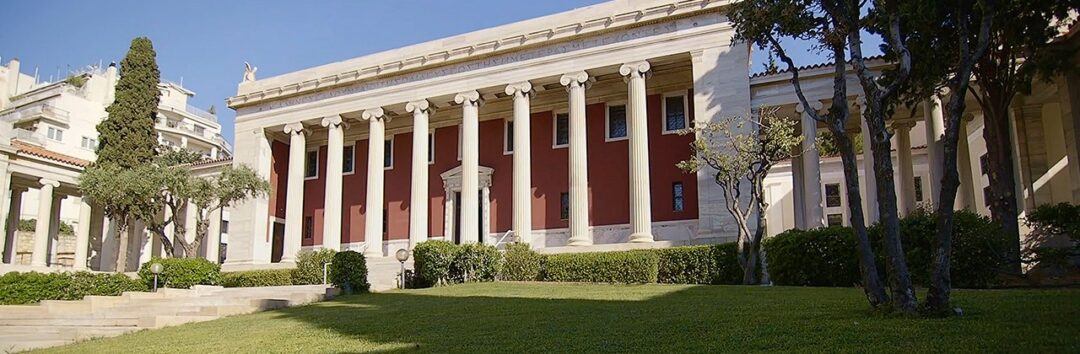

The Gennadius Library: Opened in 1926 with the 26,000 volume collection of diplomat and bibliophile Joannes Gennadius, the Gennadius Library houses today 145,000 titles of rare books and bindings, research materials, manuscripts, archives, and works of art that illuminate Hellenism, Greece, and neighboring civilizations from antiquity to modern times. Rare maps of the Mediterranean, early editions of Homer’s Iliad and Odyssey and a laurel wreath belonging to Lord Byron are just some of the unique items to be found here. In addition to its role as an internationally renowned library and research institution, the Library is an active participant in the Athenian and international cultural community through its public lectures, seminars, concerts, exhibitions, and publications.
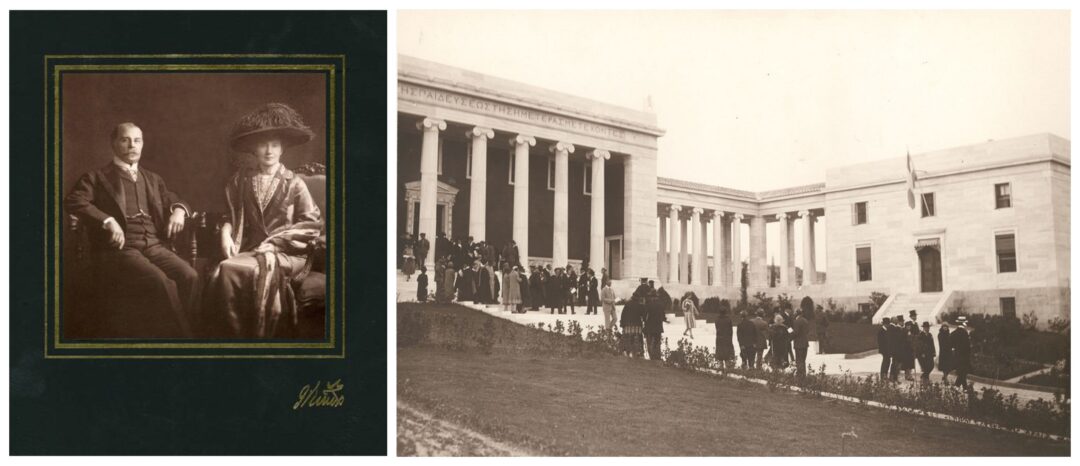
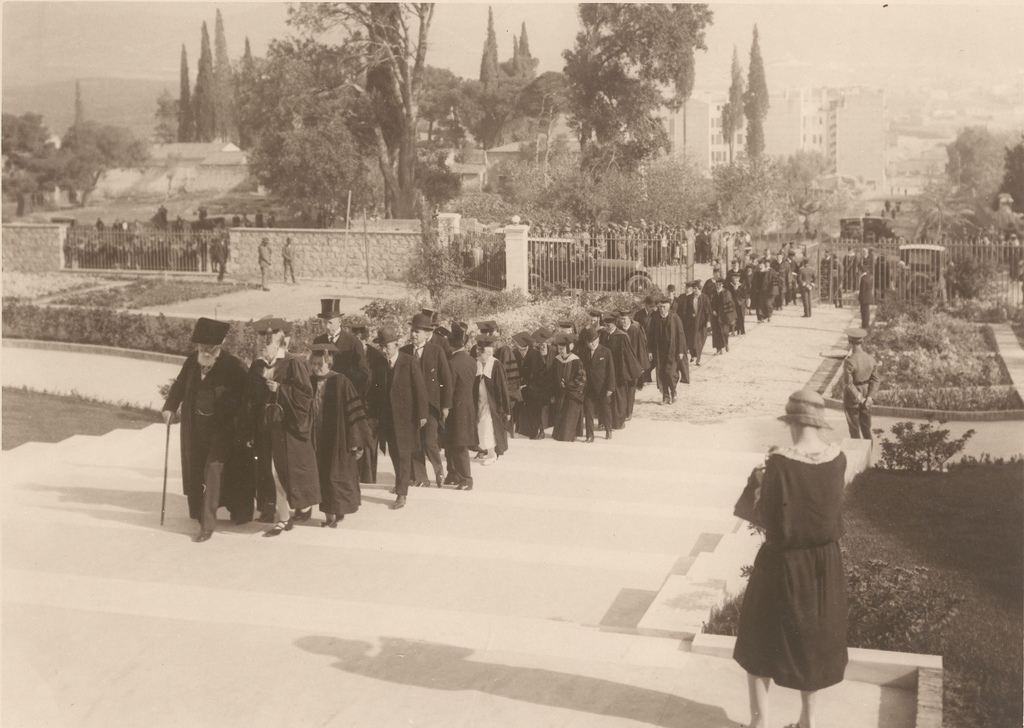
Founders Joannes and Florence/Anthi Gennadius (upper left), Opening of the Gennadius Library, April 23, 1926 (upper right), Officials arriving at the opening of the Gennadius Library (lower) (Photos: www.ascsa.edu.gr)
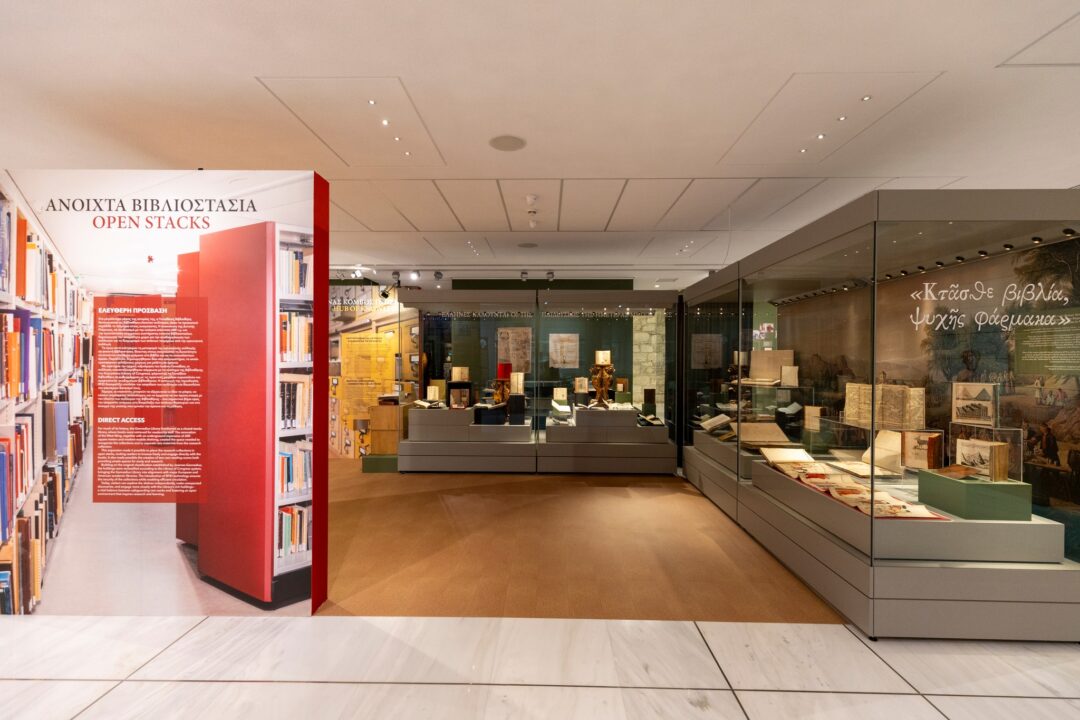
Approximately 100 selected objects—rare books, manuscripts, works of art, maps, and archival material—highlight the journey of an institution that evolved from a private collection into an international research center. The exhibits, complemented by photographs and audiovisual material, shed light not only on the collection itself but also on the people behind it: collectors, donors, researchers, and librarians who shaped the identity of the Gennadius Library.
“The exhibition is not only a retrospective of the past, but also a starting point for the future. It highlights the dynamic nature of knowledge as a living process that continues to evolve,” notes the Director of the Gennadius Library, Maria Georgopoulou, curator of the exhibition, together with Irene Solomonidi, Head Librarian.
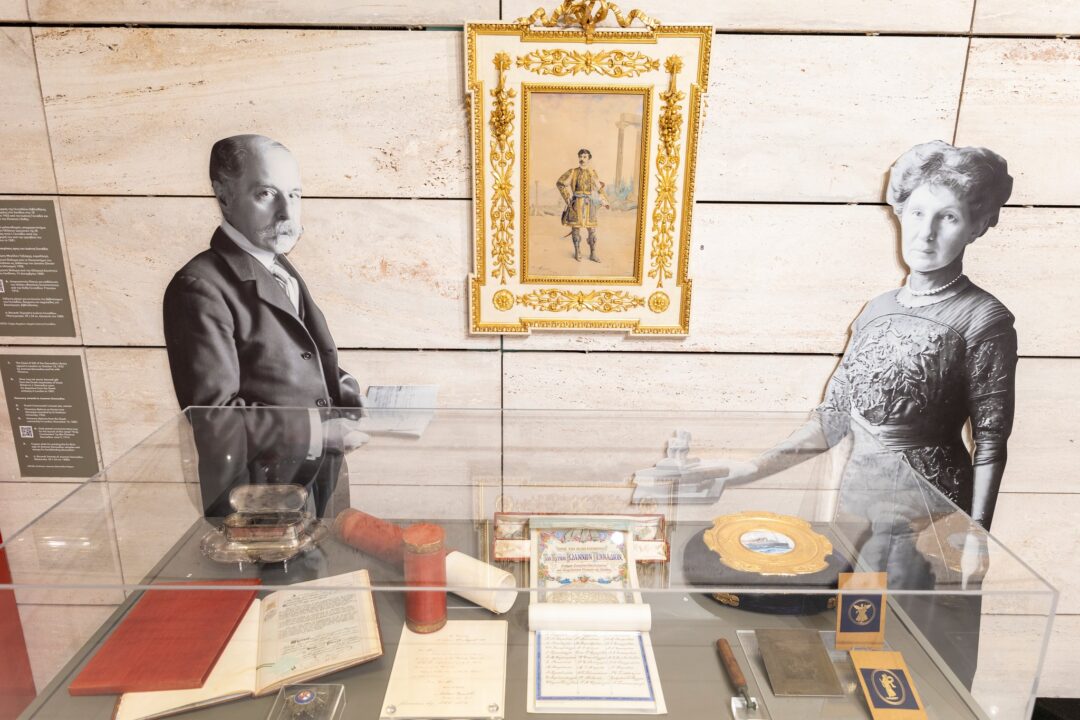
Forming a unified narrative, the exhibition is structured into ten thematic sections presenting:
- “The Vision” – the creation of Ioannis Gennadios’s collection
- “The Foundation” – the birth of the Library as an institution
- “The Legacy” – the donations that shaped it
- “The Collections” – rare books, manuscripts, and archives
- “Beyond the Book” – works of art, maps, and visual material
- “People” – the individuals behind the Library
- “Research” – its contribution to the humanities
- “Networks” – its international presence and collaborations
- “A Library Without Borders” – its cultural outreach
- “The Future” – its digital transition and role in the 21st century
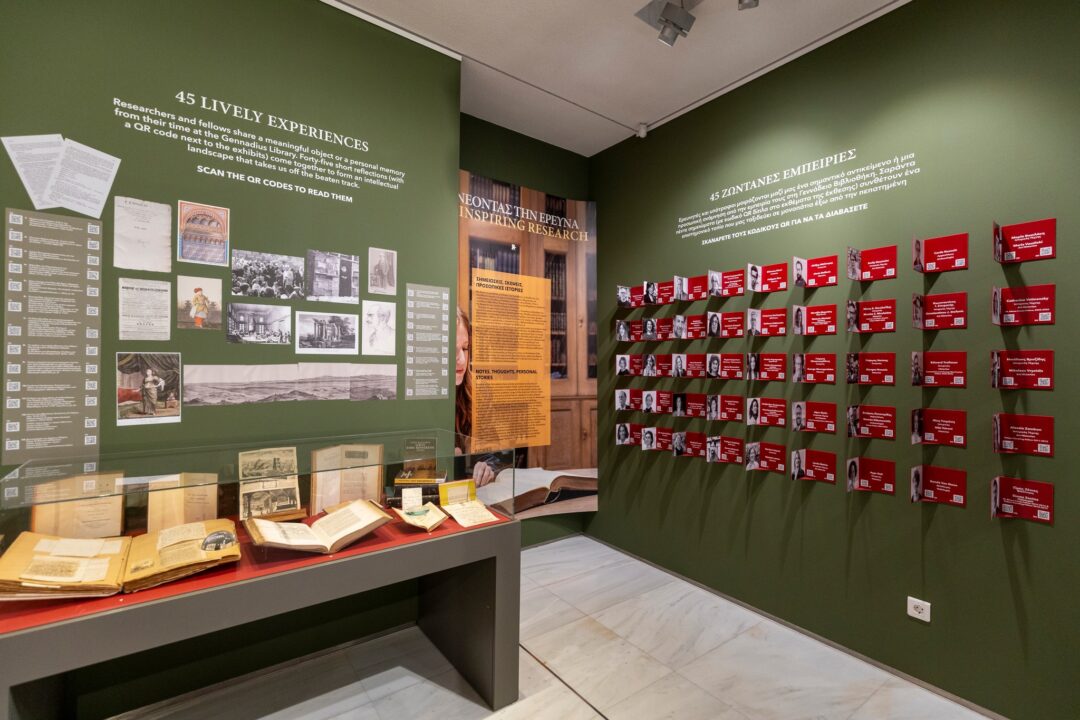
One of the exhibition’s most engaging features is a section created by 45 researchers who have worked or studied at the Gennadius Library. Using their mobile phones and QR codes, visitors can discover the researchers’ favorite items from the Library, along with the reasons they selected them
The exhibition sections are arranged within the I. Makriyannis Wing in Kolonaki district in a way that allows visitors to follow multiple paths—historical, thematic, and experiential—each shaping their own personal interpretation of the Gennadius Library. Admission to the exhibition is free.
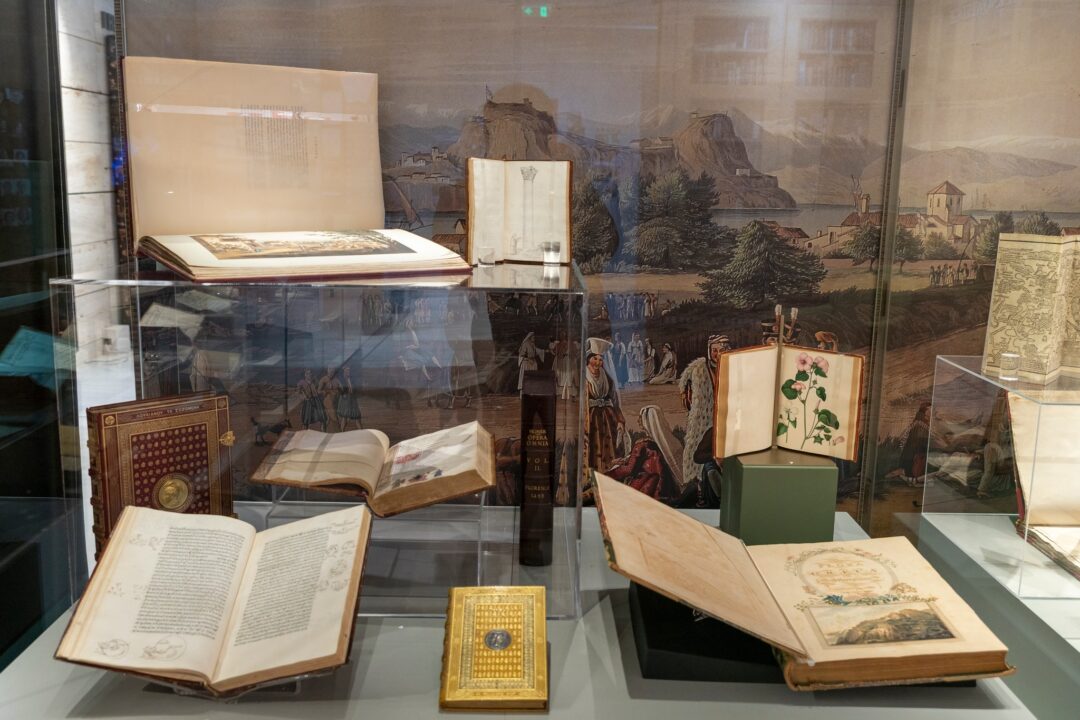
Rare editions presented, among others, at the exhibition:
- The grammar of Laskaris, the first dated Greek edition, marking the birth of Greek printing in the West.
- The Athenian edition of “The Lyric and Bacchic Poems” by Athanasios Christopoulos, the first Greek book printed in the city (1825).
- The first edition of Lucian, printed in Florence by Lorenzo de Alopa in 1496, edited by Janus Laskaris.
- The first edition of Homer’s works (Florence, 1488), produced by the Greek scholar Demetrios Chalkokondyles.
- The complete works of Aristotle, first printed in Venice in five volumes (1495–1498), the first major printing achievement of Aldus Manutius.
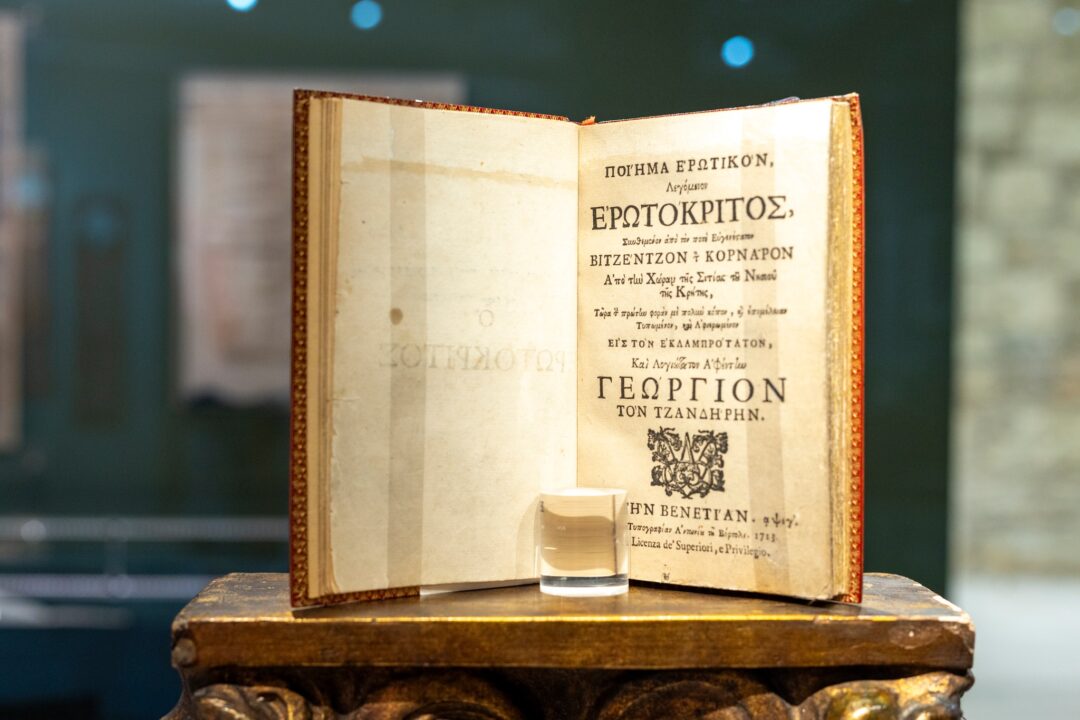
- The first printed edition of “Erotokritos” by Vitsentzos Kornaros, published in 1713 in Venice by Antonio Bortoli.
Read also: History of Greek Printing by the American School of Classical Studies at Athens
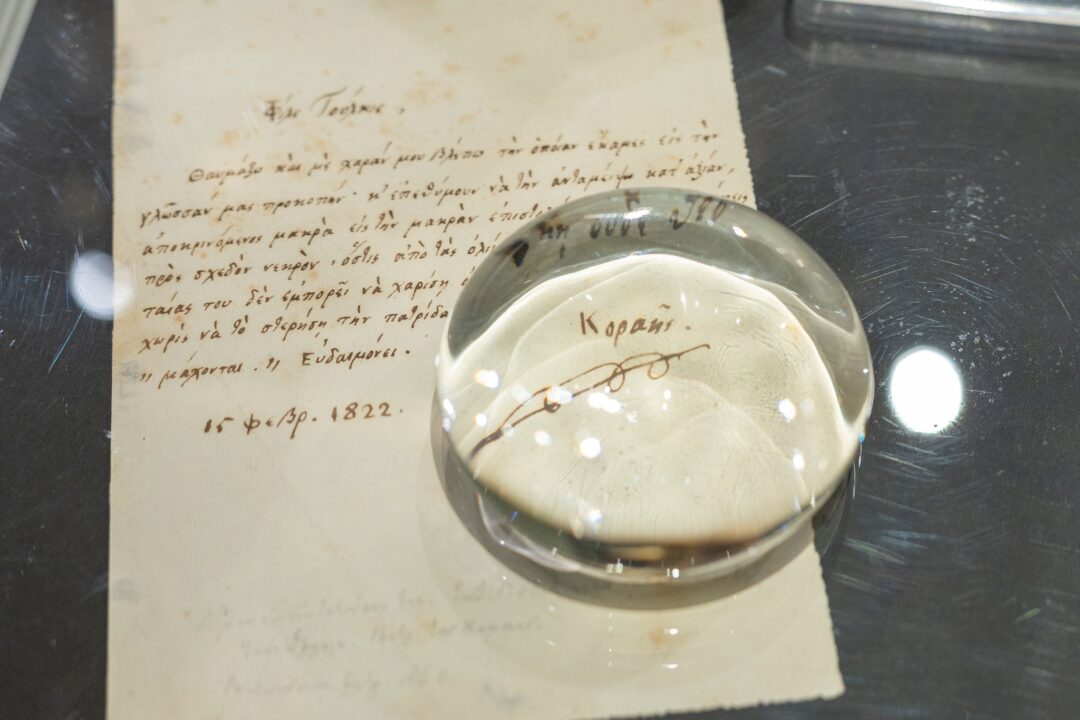
Exhibition “Gennadius Library 100. A Century of Inspiration”, American School of Classical Studies at Athens
Source: https://www.amna.gr
Photos: https://www.facebook.com/GennadiusLibrary/
TAGS: GREEK STUDIES | HERITAGE | HISTORY | LITERATURE & BOOKS