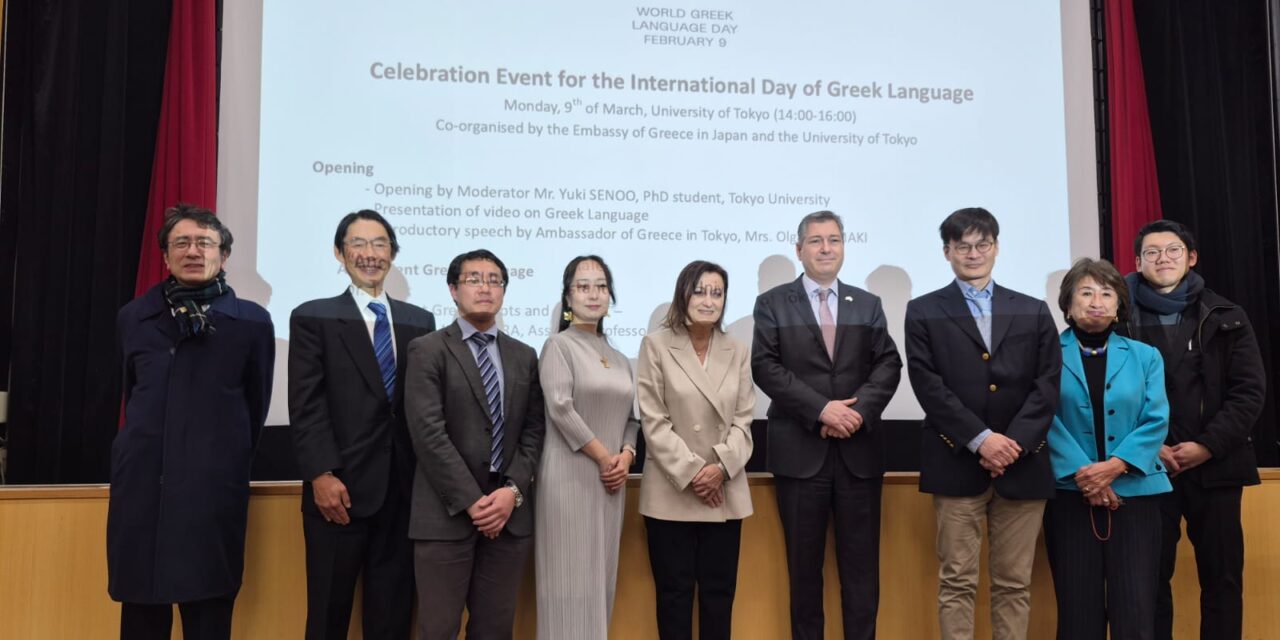
Celebrating World Greek Language Day, the Embassy of Greece in Tokyo organized, on March 9, an academic event in cooperation with the University of Tokyo, held at the University’s premises. At the opening of the event, the commemorative message of the Deputy Minister of Foreign Affairs, Mr. Loverdos, was presented, along with a relevant informational video produced by the Ministry of Culture, translated into Japanese.
This was followed by a welcome address from the Ambassador of Greece to Tokyo, Ms. Kliamaki, who emphasized the timeless value of the Greek language throughout its long history, from the works of ancient Greek authors to our National Poet, Dionysios Solomos, as well as its contemporary use in science and its status as an official language in Greece and Cyprus, both members of the European Union.
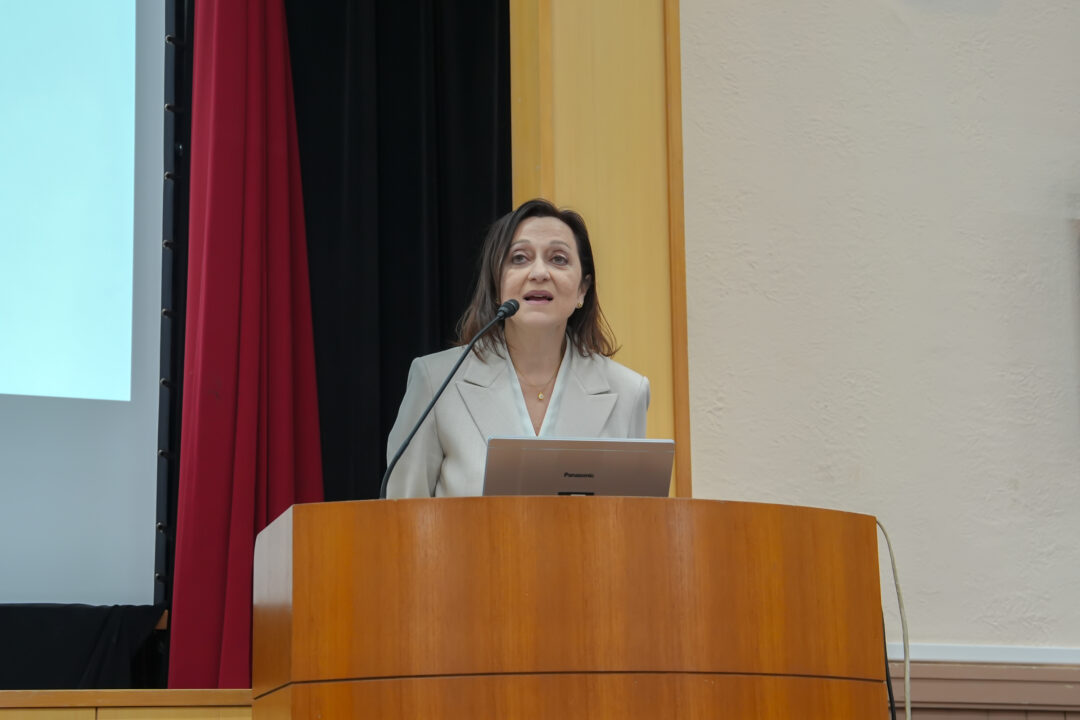
The global influence of the Greek language was internationally acknowledged at the 43rd General Conference of UNESCO (Samarkand, November 2025). The audience was particularly impressed by the speech of the Minister of Culture, Ms. Mendoni, delivered at the UNESCO General Conference, in which she illustrated the contribution of Greek to the English language through the use of Greek-derived terms.
The event also featured lectures by academics with a background in classical studies from four different universities in the Japanese capital, addressing themes related to different periods of the Greek language. Dr. Takashi Matsuura (University of Tokyo) spoke about the origins of the Greek language, including the arrival of the first Greek tribes in the Greek region and the earliest examples of ancient Greek writing and dialects. Special emphasis was placed on the connection between Linear B and the Cypriot syllabary with the ancient Greek alphabet.
Professor Yoshinori Sano (International Christian University) discussed the reception of elements from the Iliad—especially the story of Ajax—in Sophocles’ tragedy of the same name, also drawing parallels with similar themes in Japanese epics and Noh theatre. Explaining the evolution of the Greek language after antiquity, he concluded that despite the millennia separating classical ancient and modern Greek, linguistic continuity remains stronger than in the case of Japanese.
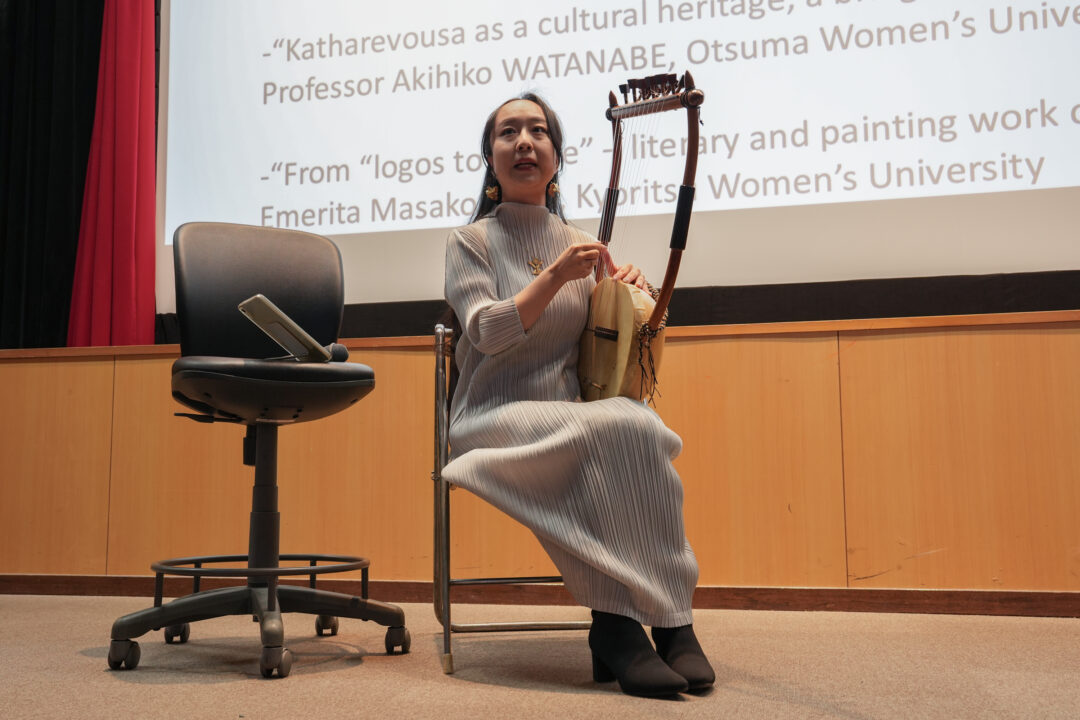
The audience also attended with admiration a short musical performance by artist Futaba Sato, a graduate of classical studies, who performed excerpts from the Iliad and poems by Sappho, accompanied by an ancient Greek lyre acquired from a specialized workshop in Greece.
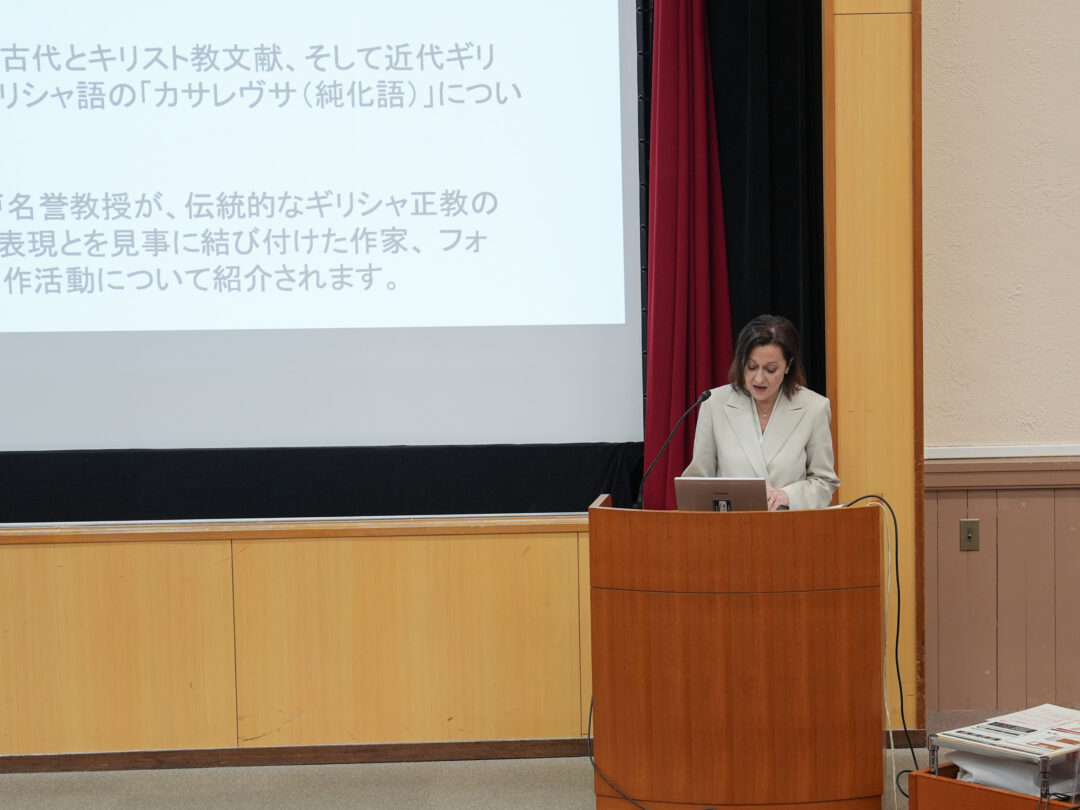
In the second part of the event, Professor Akihiko Watanabe (Otsuma Women’s University) addressed katharevousa as a linguistic bridge between ancient and modern Greek and as a unique example of combining elements from all periods of the Greek language. By reading excerpts from the works of A. Papadiamantis and D. Vikelas, he presented examples of the coexistence of ancient and modern Greek elements in katharevousa, a feature that continues in contemporary Greek, which is enriched by archaizing expressions.
The event concluded with a lecture by Emeritus Professor Masako Kido from Kyoritsu Women’s University, who has been awarded the rank of Commander of the Order of Beneficence for her contribution to promoting Greek culture in Japan. Her presentation focused on the work of Fotis Kontoglou, within the search of “Greekness” and the broader intellectual movement of the “Generation of the 1930s,” emphasizing the interplay between text and image and the influence of Byzantine tradition. She also referred to other major modern Greek literary figures, including Nobel laureates George Seferis and Odysseas Elytis.
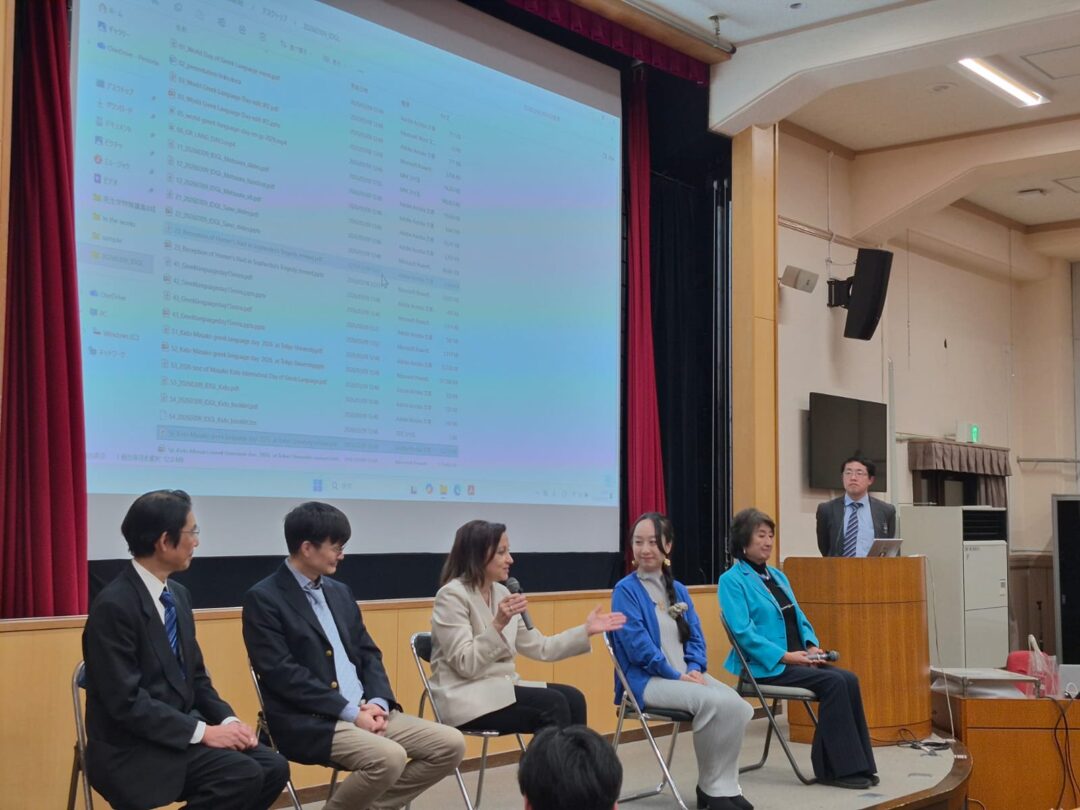
The event received a particularly positive response from the audience, consisting mainly of Japanese philhellenes and students, as well as members of the Greek and diplomatic communities. It served as a unique opportunity to showcase the long history and international significance of the Greek language at Japan’s most prestigious university. Also in attendance was the Head of the Japan–Greece Parliamentary Friendship Group and former Minister of Foreign Affairs, Defense, and Digital Reform of Japan, Mr. Taro Kono.
The success of the event was greatly supported by the Department of Classical Studies of the University of Tokyo, as well as by the high level of expertise demonstrated by the speakers.
This initiative forms part of the Embassy’s broader program to promote the Greek language in Japan. In this context, on 13 February, an interactive presentation was held for students of Shibahama School, in cooperation with the Greek language school “Girisha Plaza” and the Municipality of Minato, where the Embassy is located. The presentation focused on the Greek language and its influence on Japanese and was accompanied by a demonstration of traditional Greek dances by the Japanese dance group “Kefi.” In addition, outreach activities were conducted in four prominent Japanese schools, introducing students to Greek history, language, and culture, including reference to the establishment of 9 February as World Greek Language Day by UNESCO.